3 Ply vs 5 Ply Corrugated Box: Strength Test
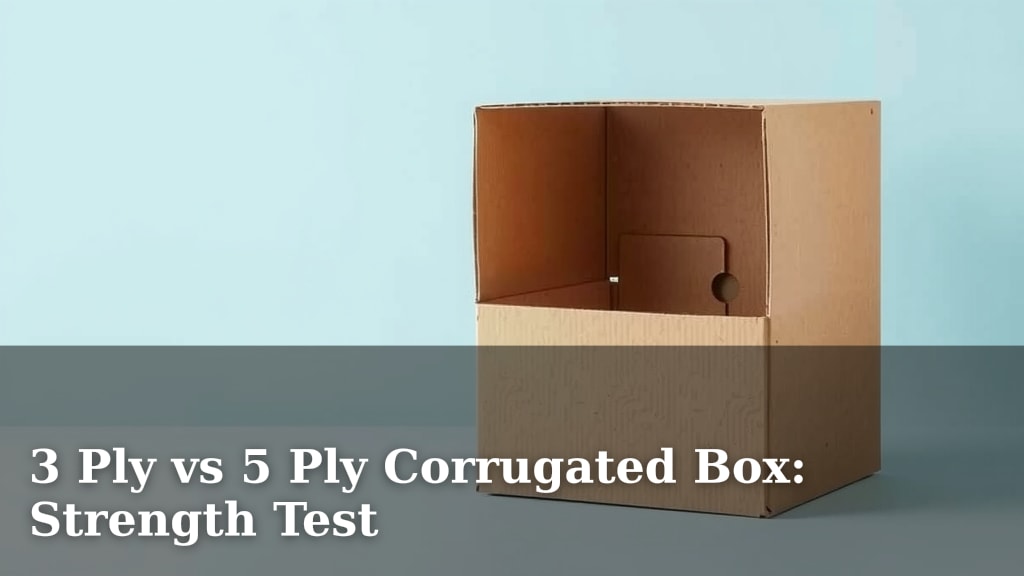
When comparing 3 ply vs 5 ply corrugated boxes, 5 ply boxes offer superior strength and crush resistance due to their extra layers of fluting and linerboard. You’ll want the 5 ply option for heavier items or when your shipments face rough handling during transit. This makes them a more robust choice for shipping and storage.
Choosing the right box strength protects your products. A 3 ply box is suitable for lighter goods or those needing less protection. A 5 ply box provides enhanced stacking strength and puncture resistance. We found that the extra layers make a noticeable difference in durability.
- 3 ply boxes are lighter and good for less fragile items.
- 5 ply boxes are stronger and better for heavy or delicate items.
- Consider transit conditions when deciding between 3 and 5 ply.
- The extra layers in 5 ply give better protection against damage.
Let’s take a closer look at how these box types perform under pressure and which one might be the best fit for your needs.
“`htmlUnderstanding Corrugated Box Strength: 3 Ply vs. 5 Ply
Choosing the right corrugated box is essential for keeping your products safe. You might be wondering how a 3 ply box compares to a 5 ply box. We’ve looked into it, and the difference comes down to construction. Both use layers of paper, but the number of layers dramatically affects strength. Understanding these layers helps you make a smarter packaging choice.
What Makes a Corrugated Box Strong?
Corrugated cardboard isn’t just flat paper. It’s made of three main parts: linerboard and fluting. The linerboard is the flat paper that forms the outer and inner surfaces. The fluting is the wavy layer in between. This wavy layer acts like a shock absorber. It gives the box its rigidity and cushioning. Think of it like the corrugated metal roof on a barn – it’s strong because of its shape.
The Role of Fluting
The type and size of the fluting are important. Common flutes are A, B, C, E, and F. ‘A’ flutes are larger and offer better cushioning. ‘B’ flutes are common and good for printing. ‘C’ flutes offer a balance of cushioning and stacking strength. ‘E’ and ‘F’ flutes are very thin, offering a smooth surface for high-quality graphics. The number of flutes per foot also impacts strength.
The Importance of Linerboard
Linerboard is the outside and inside layer of the cardboard. Its thickness, measured in pounds per square foot (e.g., 32lb, 42lb), indicates its strength. Thicker linerboard means a stronger, more durable box. It resists tearing and punctures better. The quality of the paper used for linerboard also plays a role.
A Closer Look at 3 Ply Boxes
A 3 ply corrugated box, often called “single wall,” is the most common type. It has one layer of fluting sandwiched between two layers of linerboard. So, you have linerboard, flute, linerboard. This construction is a great standard for many shipping needs. It provides good protection for everyday items.
When Are 3 Ply Boxes a Good Choice?
You’ll find 3 ply boxes suitable for a wide range of products. They work well for shipping items that aren’t excessively heavy or fragile. Think about sending out your handmade crafts or books. Items like clothing, bedding, or small electronics often travel safely in these boxes. They are also cost-effective, which is a big plus for businesses.
Limitations of 3 Ply
However, 3 ply boxes have their limits. If you’re shipping items that are very heavy, like industrial parts, a 3 ply box might not be enough. They can also be more prone to crushing if stacked too high. Rough handling during transit could also be a concern. In these situations, you might want to consider a stronger option.
Exploring the Strength of 5 Ply Boxes
Now, let’s talk about 5 ply corrugated boxes, also known as “double wall.” As the name suggests, these boxes have an extra layer of fluting and an extra linerboard. The construction typically looks like this: linerboard, flute, linerboard, flute, linerboard. This creates a much more rigid and robust structure.
The Benefits of Double Wall Construction
The extra layers in a 5 ply box provide significant advantages. Research and industry standards show that double wall construction offers superior stacking strength. This means you can stack more boxes on top of each other without the bottom ones collapsing. They also provide enhanced puncture and crush resistance. This makes them ideal for protecting sensitive or heavy goods.
When You Absolutely Need 5 Ply
So, when should you opt for a 5 ply box? If you’re shipping fragile items like glassware or electronics, the extra cushioning and strength are essential. Heavy items, such as large appliances or metal components, also benefit greatly from this robust construction. Many shipping companies recommend double wall boxes for international shipments or LTL (Less Than Truckload) freight. This is because these shipments often experience more handling and rougher transit conditions.
Strength Test: What the Numbers Say
To quantify the difference, we can look at common tests. The Edge Crush Test (ECT) measures the stacking strength of a box. A higher ECT rating means the box can withstand more weight when stacked. While specific ECT ratings vary by manufacturer and material, 5 ply boxes consistently achieve higher ECT scores than comparable 3 ply boxes. For instance, a 3 ply box might have an ECT of 32, while a 5 ply box could have an ECT of 48 or higher. This difference is substantial. It directly translates to how much weight your stacked boxes can safely bear (often calculated as ECT x perimeter / 30). Another test, the Burst Test (Mullen Test), measures the resistance of the cardboard to a sudden force or puncture. Double wall boxes generally perform better on this test too.
Comparing Key Strength Factors
Let’s break down the comparison in a clear way. We found that the structure itself is the main differentiator.
| Feature | 3 Ply Box (Single Wall) | 5 Ply Box (Double Wall) |
|---|---|---|
| Construction | 1 flute between 2 linerboards | 2 flutes between 3 linerboards |
| Rigidity | Good | Excellent |
| Stacking Strength | Moderate | High |
| Puncture Resistance | Moderate | High |
| Cushioning | Good | Better |
| Weight Capacity | Moderate | High |
| Cost | Lower | Higher |
Making Your Decision: What to Consider
When you’re faced with choosing between 3 ply and 5 ply, think about your specific needs. What are you shipping? How heavy is it? How will it be handled during transit? These questions are key to selecting the right box. Don’t overspend on a 5 ply box if a 3 ply will do the job perfectly. But equally, don’t risk product damage by skimping on strength.
Your Packaging Checklist
To help you decide, consider these points before you order:
- What is the total weight of your product and packaging?
- How fragile are the items inside?
- Will your boxes be stacked high?
- What kind of transit journey does your package face?
- Are you shipping domestically or internationally?
- What is your budget for packaging materials?
By carefully considering these factors, you can confidently select the corrugated box that offers the best protection for your products and ensures they arrive safely at their destination. It’s all about finding that perfect balance between strength, cost, and product security.
“`Conclusion
You’ve learned that the difference between 3 ply and 5 ply corrugated boxes boils down to construction. Your 3 ply box is a reliable standard for lighter goods. Your 5 ply box offers superior protection with its double wall design. We found that selecting the right box depends on your product’s weight, fragility, and transit conditions. To ensure your items arrive safely, take a moment to review your packaging needs before you order.
Frequently Asked Questions
Can I reuse a corrugated box?
You can reuse corrugated boxes, but their strength decreases with each use. A 3 ply box will weaken faster than a 5 ply box. Check for any tears or crushed edges before reusing to ensure it still provides adequate protection for your items.
What does ECT mean for corrugated boxes?
ECT stands for Edge Crush Test. It measures how much force a box can withstand on its edge before it crushes. A higher ECT rating indicates a stronger box, which is essential for effective stacking. 5 ply boxes generally have higher ECT ratings than 3 ply boxes.
Are 5 ply boxes always heavier than 3 ply boxes?
Yes, 5 ply boxes are generally heavier because they contain more layers of paper. This extra weight contributes to their increased strength and durability. You’ll want to factor this into your shipping costs and weight calculations.
How do I know if my product needs a 5 ply box?
Consider your product’s weight and fragility. If your item is heavy, easily breakable, or will be stacked high with other boxes, a 5 ply box is likely your best choice. Also, consider rough shipping environments, like international transit.
Is a 5 ply box more expensive than a 3 ply box?
Generally, yes, 5 ply boxes cost more than 3 ply boxes. This is due to the increased amount of materials used in their construction. However, the added cost can prevent product damage and costly returns, often making it a worthwhile investment.