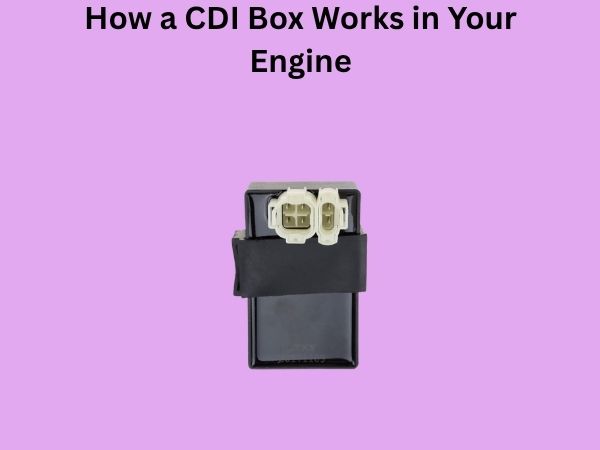
Ignition Explained: How a CDI Box Works in Your Engine
Have you ever wondered what makes your engine ignite at precisely the right moment? If you’ve peeked under the hood or listened to a mechanic talk about CDI boxes, you might have felt a bit lost. That’s completely normal. The world of automotive ignition systems can seem like rocket science, but I’m here to break it down into bite-sized pieces that actually make sense.
A CDI box—or Capacitor Discharge Ignition box—is like the maestro conducting an orchestra of sparks inside your engine. Without it, your vehicle simply wouldn’t run. In this comprehensive guide, I’ll walk you through exactly how these small but mighty devices work, why they matter, and what happens when something goes wrong.
What Is a CDI Box and Why Should You Care?
Let me start with the basics. A CDI box is an electronic ignition control module that determines when your spark plugs fire. Think of it as the traffic controller at a busy intersection—it directs the flow of electricity to ensure everything happens at exactly the right time.
Before CDI technology became standard, vehicles relied on mechanical distributors and points that would wear down over time. These older systems were prone to failure and required frequent maintenance. The CDI box changed everything by introducing precision electronic timing that’s far more reliable.
If you drive a motorcycle, ATV, small engine equipment, or even some modern cars, you’ve got a CDI box working silently in the background. Without it, your engine wouldn’t know when to spark, and you’d be going nowhere fast.
The Basic Components of a CDI Ignition System
To understand how a CDI box works, you need to know its supporting cast. An ignition system isn’t just about the box itself—it’s an entire ensemble of parts working together in perfect harmony.
The Magneto or Pickup Coil
Every CDI system starts with a magneto or pickup coil. This component generates a small electrical signal that tells the CDI box it’s time to do its job. Imagine it as the bell that rings to get the conductor’s attention.
The magneto works by using permanent magnets that rotate past a coil of wire. As they pass, they create a magnetic field that induces an electrical current. This signal is incredibly weak—we’re talking millivolts here—but it’s enough to trigger the entire ignition sequence.
The Power Source: Battery or Alternator
The CDI box needs power to operate, and that comes from either your vehicle’s battery or alternator. This is the fuel that keeps the ignition system running. The CDI box stores energy and releases it in controlled bursts to the ignition coil.
The Ignition Coil
The ignition coil is where the real transformation happens. The CDI box sends a signal to the coil, which then steps up the voltage from around 12 volts to thousands of volts. It’s like taking a whisper and amplifying it into a roar.
The Spark Plugs
Finally, we have the spark plugs themselves. These are the endpoints of the entire system—the actual devices that create the spark that ignites your fuel mixture. Without spark plugs working in tandem with the CDI box, there’s no combustion.
How a CDI Box Actually Works: The Step-by-Step Process
Now let’s dive into the magic. Understanding the actual operation of a CDI box requires us to follow the journey of electricity through the system.
Step One: Signal Generation
Everything begins when the magneto or pickup coil sends a signal to the CDI box. This happens as the engine crankshaft rotates. The signal tells the CDI box that the piston is approaching the top of its stroke and needs ignition soon.
This signal is crucial because it ensures precise timing. Without it, the CDI box would be firing randomly, and your engine would run like a car with hiccups.
Step Two: Energy Storage
Here’s where the capacitor comes into play—that’s where the “C” in CDI comes from. When the CDI box receives the signal, it charges a capacitor with energy from your battery or alternator. This capacitor acts like a rechargeable battery, storing electrical energy for a fraction of a second.
The advantage of using a capacitor instead of relying on battery voltage directly is incredible efficiency. Capacitors can charge and discharge extremely rapidly, allowing for precise timing control.
Step Three: Triggering the Ignition Coil
Once the capacitor has stored sufficient energy and the timing is right, the CDI box triggers the ignition coil. This is where the transformation occurs. The energy stored in the capacitor flows through the primary windings of the ignition coil.
As this current suddenly stops (we call this the switching action), it creates a rapid change in magnetic field around the secondary windings of the coil. This magnetic change induces a massive voltage spike—we’re talking 20,000 to 40,000 volts or even higher depending on the system.
Step Four: Delivering High Voltage to the Spark Plug
That high voltage races through the distributor cap (in older systems) or directly to the spark plug (in newer designs) through the spark plug wire. The voltage needs to be this high because it has to jump the gap inside the spark plug—typically 0.6 to 1.3 millimeters.
When the voltage reaches the spark plug, it overcomes the resistance of the air gap and creates an electrical arc. That arc is the spark that ignites the fuel mixture in your combustion chamber.
Step Five: The Cycle Repeats
Once the spark has done its job igniting the fuel, the cycle completes. The capacitor discharges, the ignition coil resets, and the system waits for the next signal from the magneto. This entire process happens thousands of times per minute when your engine is running at normal speeds.
Advanced Features Modern CDI Boxes Offer
Today’s CDI boxes aren’t just simple timing devices. Many include sophisticated features that enhance performance and reliability.
Advance Timing Control
Some CDI boxes adjust the ignition timing based on engine speed. This is called advance timing, and it optimizes when the spark occurs depending on how fast the engine is running. At lower RPMs, the spark happens later; at higher RPMs, it happens earlier.
Temperature Compensation
Modern systems can adjust for temperature changes. A cold engine needs slightly different timing than a hot engine, and advanced CDI boxes handle this automatically.
Rev Limiters
Some CDI units include built-in rev limiters that prevent your engine from exceeding a safe maximum RPM. This protects your engine from damage caused by over-revving.
Comparing CDI Systems to Other Ignition Technologies
Understanding how a CDI box works becomes even clearer when you compare it to other ignition systems.
CDI vs. Traditional Points and Condenser
The old points and condenser system used mechanical contacts that would open and close to interrupt current flow. These parts wore down quickly and needed frequent adjustment. CDI systems are completely electronic, eliminating mechanical wear and requiring virtually no maintenance.
CDI vs. Coil-on-Plug Systems
Modern vehicles often use coil-on-plug systems where ignition coils sit directly on top of each spark plug. While different in design, both systems accomplish the same goal: precise ignition timing. CDI boxes are more common in motorcycles, ATVs, and smaller engines, while coil-on-plug systems dominate modern cars.
Signs Your CDI Box Might Be Failing
A failing CDI box can cause various problems that might initially seem unrelated to ignition.
- Hard starting: Your engine cranks but won’t catch, or takes multiple attempts to start.
- Rough idling: The engine runs unevenly at idle, feeling jerky or unstable.
- Stalling: Your engine unexpectedly shuts off while driving or sitting still.
- Loss of power: The engine feels weak and won’t accelerate smoothly.
- Backfiring: You hear explosive sounds from the exhaust as unburned fuel ignites outside the cylinder.
- No spark: Testing with a spark plug tester shows no spark at the plugs.
How to Test a CDI Box
If you suspect your CDI box is the culprit, there are several ways to test it. However, I should mention that proper diagnosis sometimes requires a professional mechanic with specialized equipment.
Visual Inspection
Start by looking for obvious signs of damage. Check for burnt spots, cracks, or corrosion on the CDI box housing. If it looks like it’s been through a war, replacement is likely in your future.
Testing for Spark
The most basic test involves checking if the system produces spark. You can use a spark plug tester or simply remove a spark plug and hold it near the engine while cranking. If you see a spark jump across the gap, your CDI box is at least generating signal.
Resistance Testing
With a multimeter, you can test the resistance of components. However, this requires knowing the specific specifications for your CDI box, which you’ll find in your engine manual.
Professional Diagnostic Equipment
Mechanics often use oscilloscopes and specialized testers that show exactly what’s happening in your ignition system. These tools can pinpoint problems that basic testing might miss.
CDI Box Maintenance: Keeping It Running Strong
One of the beauties of CDI technology is that it requires almost no maintenance. Unlike older ignition systems, there’s nothing to adjust or replace regularly.
Keep It Dry
The primary enemy of a CDI box is moisture. Water can corrode the internal circuitry and cause complete failure. Make sure your CDI box is properly sealed and protected from rain, snow, and water spray.
Protect from Heat
Excessive heat can damage the electronic components inside. Make sure your CDI box has adequate airflow around it and isn’t mounted directly against a hot engine surface.
Check Connections
While the CDI box itself is maintenance-free, the wiring connections around it can loosen or corrode. Periodically inspect connectors and ensure they’re clean and tight.
The Evolution of CDI Technology
The CDI box has come a long way since its introduction. Early systems were simple analog circuits, while modern versions incorporate digital processors and advanced algorithms.
Today’s CDI boxes can communicate with other engine management systems, adjusting ignition timing based on fuel octane rating, atmospheric conditions, and countless other variables. Some even include diagnostic capabilities that help identify problems before they become serious.
Replacing Your CDI Box: What You Need to Know
If testing confirms that your CDI box is faulty, replacement is straightforward. Most CDI boxes are secured with a few bolts and connected via a simple plug.
When choosing a replacement, make sure you get one specifically designed for your engine model. Using the wrong unit can cause performance problems or prevent your engine from starting entirely.
The cost varies widely depending on your vehicle type, ranging from under $50 for small engine CDI boxes to several hundred dollars for specialized motorcycle or ATV units.
CDI Systems in Different Applications
While we’ve discussed CDI boxes in general terms, they work slightly differently depending on the application.
Motorcycle CDI Boxes
Motorcycle CDI systems often include advanced features like rev limiters and multi-stage advance curves. They’re designed to handle the demanding requirements of high-performance engines that frequently operate at varying RPM levels.
ATV and Small Engine Systems
ATVs and small engines use simpler CDI boxes optimized for durability and reliability in rugged conditions. Many include weatherproofing features to handle dust and moisture.
Marine Engine Applications
Marine CDI boxes face unique challenges from salt water and constant vibration. These specialized units include enhanced corrosion protection and reinforced mounting systems.
Troubleshooting Common CDI Box Issues
Not every ignition problem points to a faulty CDI box. Let’s explore how to differentiate between CDI failure and other issues.
The CDI Box vs. Ignition Coil Problem
Both can cause similar symptoms, but a simple test helps distinguish them. If you have spark at the spark plug but the engine still won’t fire correctly, the coil is likely the problem. If there’s no spark at all, the CDI box is the likely culprit.
The CDI Box vs. Bad Spark Plug
A worn spark plug might cause poor running, but it won’t affect the entire ignition system. If you’re experiencing no spark on multiple cylinders, the CDI box is suspect. A bad plug typically only affects one cylinder.
The CDI Box vs. Pickup Coil Failure
Without a good signal from the pickup coil, the CDI box can’t function. If testing shows no signal is reaching the CDI box, the pickup coil is likely the problem, not the CDI unit itself.
Conclusion
A CDI box might seem complicated at first glance, but when you break down how it works, it’s elegantly simple. It receives a signal, stores energy in a capacitor, triggers the ignition coil at precisely the right moment, and sends thousands of volts to your spark plugs. This happens thousands of times per minute, enabling combustion and keeping your engine running.
Understanding how your CDI box works gives you insight into one of the most critical systems in your vehicle. Whether you’re a motorcycle enthusiast, ATV rider, or small engine owner, this knowledge empowers you to diagnose problems and maintain your equipment more effectively.
Remember that while CDI technology is remarkably reliable and maintenance-free, problems can occur. If your engine is exhibiting symptoms of ignition trouble, use the testing methods we discussed to pinpoint the issue. And if you determine your CDI box needs replacement, don’t hesitate—a new one will restore your engine to peak performance.
Frequently Asked Questions
Can I repair a CDI box or does it always need replacement?
In most cases, CDI boxes cannot be repaired. They’re sealed electronic units with internal circuits that are difficult or impossible to access. If testing confirms it’s faulty, replacement is the practical solution. Some shops offer rebuilt CDI boxes at a lower cost than new units, which can be a budget-friendly alternative.
How long does a CDI box typically last?
A properly functioning CDI box can last the lifetime of your vehicle or equipment. Since they have no moving parts and require no maintenance, many original CDI boxes in motorcycles and small engines continue working flawlessly for 10, 20, or even 30 years. Premature failure usually results from moisture, heat damage, or manufacturing defects rather than normal wear.