How Accurate Are Spirit Boxes Really? A Comprehensive Investigation Into Paranormal Detection Devices
If you’ve ever watched a paranormal investigation show on television or scrolled through paranormal forums online, you’ve probably encountered something called a spirit box. These mysterious devices have become incredibly popular among ghost hunters and paranormal enthusiasts over the past decade. But here’s the million-dollar question: do they actually work? Are they genuinely picking up communications from the other side, or is there something else entirely going on? Let me take you on a journey through the facts, the fiction, and everything in between when it comes to spirit box accuracy.
What Exactly Is a Spirit Box and How Does It Work?
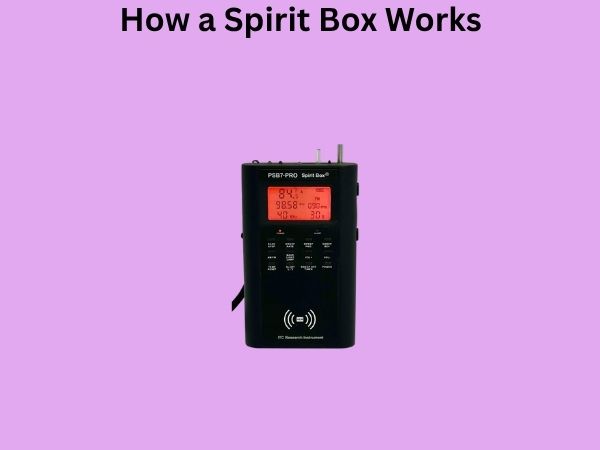
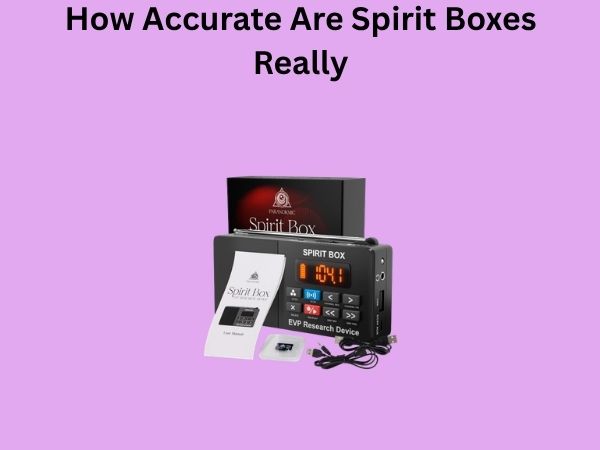
Before we dive into questions about accuracy, we need to understand what a spirit box actually is. A spirit box is a portable electronic device that quickly sweeps through AM or FM radio frequencies. Think of it like a radio that’s rapidly flipping through stations at an accelerated speed, usually several stations per second. The idea behind this technology is that spirits or entities from the paranormal realm can manipulate or interrupt these radio waves to communicate with the living.
The most popular model is the Frank’s Box, named after Frank Klugewicz, who pioneered this design in the early 2000s. When you turn on a spirit box, you’ll hear a constant static noise mixed with fragments of radio broadcasts, music, and advertisements. Paranormal investigators believe that spirits can use their energy to pull specific words or phrases from the radio frequency spectrum to answer questions posed by the living.
The Technology Behind the Device
Spirit boxes use relatively simple technology. They contain a radio tuner, a speaker, and a circuit board that controls the sweeping speed. The sweeping mechanism is what makes them different from a regular radio. Instead of staying on one station, the device moves across the frequency range at incredible speed. Some models allow users to adjust the sweep rate and direction, giving them more control over the experience.
The static you hear, known as white noise or radio noise, is essentially electromagnetic radiation picked up by the device. This is a completely natural occurrence whenever you have a radio between stations. It’s not mysterious or supernatural in any way—it’s just physics.
The Science Behind Spirit Box Technology: Separating Fact From Fiction
Now, let’s talk about what science actually tells us about spirit boxes. From a purely scientific standpoint, there’s no mechanism by which a spirit or non-physical entity could manipulate radio frequencies in a way that produces meaningful, coherent messages. Radio waves are electromagnetic radiation that follows the laws of physics. These laws don’t have any known exceptions for supernatural intervention.
When scientists examine spirit box claims under controlled laboratory conditions, something interesting happens: the accuracy drops dramatically compared to what we see on television shows. This discrepancy is telling. If spirit boxes were genuinely detecting paranormal communication, their accuracy should remain consistent regardless of whether someone is watching or testing them. Instead, we see a pattern that’s familiar to anyone who understands psychology and perception.
Radio Frequency Mechanics Explained
Radio frequencies are simply electromagnetic waves traveling through space at the speed of light. They carry information encoded by radio stations and other broadcasters. When a spirit box sweeps through these frequencies, it’s essentially capturing tiny fragments of legitimate radio broadcasts. These fragments—random words, phrases, and sounds—are mixed together in a continuous stream.
Here’s where it gets interesting: human beings are incredibly good at finding patterns, even when they don’t exist. This is part of our evolutionary makeup. Our ancestors who could quickly recognize patterns had a better survival rate. We’ve inherited this trait, and it can work against us when we’re trying to objectively evaluate evidence.
Common Myths About Spirit Box Accuracy That Need Debunking
There are several widely believed myths about spirit boxes that deserve serious examination. Let’s address them one by one.
Myth One: Spirit Boxes Only Pick Up Dead People
Many people believe that spirit boxes are specifically designed to communicate with deceased individuals. However, there’s no scientific basis for this claim. If a spirit box were picking up anything paranormal—which itself is unproven—there would be no reason to believe it could distinguish between different types of entities or beings. This myth persists largely because of how spirit boxes are marketed and portrayed in popular media.
Myth Two: Higher Accuracy Requires More Expensive Equipment
Some manufacturers claim that their premium spirit box models are more accurate than cheaper alternatives. While it’s true that more expensive models might have better sound quality or adjustable sweep speeds, there’s no evidence that these features actually improve paranormal communication accuracy. This is more about marketing than functionality.
Myth Three: Accuracy Improves With Experience
You’ll often hear paranormal investigators claim that they’ve become better at interpreting spirit box messages as they’ve gained experience. This is a textbook example of confirmation bias at work. The more someone uses a spirit box, the more they learn to find meaningful patterns in the noise, not because the device is becoming more accurate, but because their brain is becoming better at applying pattern recognition to random sounds.
What Do Controlled Scientific Studies Actually Show?
When researchers have conducted controlled experiments with spirit boxes, the results have been consistently underwhelming for believers. In controlled settings where double-blind testing is employed—meaning neither the investigator nor the person asking questions knows what the correct answer should be—spirit box accuracy falls to around the level of random chance.
Random chance for yes-or-no questions would be 50 percent. When spirit box results are analyzed in properly controlled studies, they typically fall right around that range. This is exactly what we’d expect if the device were simply producing random words from radio broadcasts, which our brains then interpret as meaningful.
Notable Research Findings
- A 2014 study examining spirit box claims found no statistical difference between spirit box results and random guessing
- Researchers testing spirit boxes with questions that had predetermined answers found accuracy rates of approximately 48 to 52 percent
- When audio recordings were analyzed for clarity and coherence without confirmation bias, the quality of “communication” was significantly lower than paranormal investigators reported
- Blinded listening tests showed that people couldn’t consistently identify words they believed they heard in spirit box recordings
The Role of Confirmation Bias in Spirit Box Interpretation
Confirmation bias is the tendency to search for, interpret, favor, and recall information in ways that confirm our preexisting beliefs. It’s one of the most powerful cognitive forces at work in paranormal investigation, and it plays a massive role in how people interpret spirit box results.
Imagine you’re asking a spirit box a yes-or-no question. You’re listening intently to the static and fragments of radio broadcasts. Your brain is actively searching for meaningful patterns. Then you hear something that sort of sounds like “yes.” Your brain lights up—you found confirmation of your belief that spirits are communicating. You’re more likely to remember this hit and forget about the ten times you heard ambiguous noise that you couldn’t interpret.
How Confirmation Bias Distorts Our Perception
Our brains are essentially prediction machines. They’re constantly generating hypotheses about what should happen next based on our beliefs and expectations. When you approach a spirit box believing that spirits will communicate, your brain is actively searching for evidence of that communication. It’s filtering the chaos of random noise through the lens of your expectations.
This isn’t unique to paranormal investigation. The same cognitive bias affects how doctors interpret medical imaging, how judges interpret legal evidence, and how scientists interpret experimental results. The difference is that in scientific fields, researchers have developed methodologies specifically designed to counteract these biases. In paranormal investigation, these biases often run unchecked.
Environmental Factors That Affect Spirit Box Results
The environment in which you use a spirit box can significantly impact what you hear, but not necessarily in the way paranormal investigators think. Various environmental factors influence the radio frequencies being picked up and how clearly they come through.
Radio Station Density and Frequency Crowding
In urban areas with many radio stations broadcasting, you’ll get different results than in rural areas with fewer stations. This is simple radio physics. The more stations on the air, the more fragments of speech and music will be available for the spirit box to pick up. This environmental factor alone can make it seem like “spirits” are more talkative in cities than in the countryside.
Time of Day Variations
The time of day affects which radio stations are broadcasting and how clearly they come through. Radio propagation changes throughout the day, especially for AM frequencies. This is why you might get different results from your spirit box at 3 AM versus 3 PM. These are environmental effects, not indicators of increased paranormal activity at certain times.
Weather Conditions
Atmospheric conditions, solar activity, and geomagnetic storms all affect radio propagation. During solar storms or periods of geomagnetic activity, radio frequencies may behave unexpectedly. Paranormal investigators sometimes interpret these effects as signs of increased spiritual activity, when they’re actually just weather-related electromagnetic phenomena.
Comparing Spirit Boxes to Other Paranormal Investigation Tools
Spirit boxes aren’t the only devices paranormal investigators use. Let’s compare their claimed accuracy to other tools in the paranormal investigator’s toolkit.
EMF Meters Versus Spirit Boxes
EMF meters measure electromagnetic fields. These devices have legitimate applications in construction, electrical work, and safety inspection. However, when used for paranormal investigation, they suffer from the same accuracy problems as spirit boxes. They detect environmental electromagnetic fields that have perfectly mundane explanations—power lines, electrical appliances, cell phone towers. The accuracy of EMF meters for detecting paranormal activity is essentially zero when tested under controlled conditions.
Thermal Imaging Cameras
Thermal imaging cameras detect heat signatures. They’re widely used in legitimate applications like building inspection and search and rescue. For paranormal investigation, they can detect cold spots, but these cold spots usually have environmental explanations. A cold spot might simply be an area with poor insulation, a draft, or lower air circulation. The accuracy of thermal cameras for detecting ghosts is no better than any other tool.
Digital Voice Recorders
Recording ambient sound and then analyzing it for “electronic voice phenomena” or EVP has become popular in paranormal circles. Like spirit boxes, this is subject to the same pattern recognition biases. When you listen to hours of ambient sound looking for voices, you’ll eventually find them, regardless of whether they’re actually there. This is pareidolia—a phenomenon where our brains interpret random stimuli as meaningful patterns.
What Do Real-World Accuracy Rates Actually Look Like?
If we take paranormal investigators at their word and examine the accuracy rates they claim in their own investigations, we can conduct a meta-analysis of how well spirit boxes actually perform.
Most paranormal investigators report that not every question receives an answer from their spirit box. Success rates typically range from 20 to 40 percent of questions being answered. In other words, for every question asked, there’s a 60 to 80 percent chance of getting no coherent response.
Compare this to controlled studies. When researchers ask questions with predetermined answers and analyze spirit box responses without confirmation bias, accuracy drops to chance levels. The difference between what investigators report and what controlled studies show suggests that the accuracy isn’t coming from the device—it’s coming from human interpretation.
How Practitioners Claim to Improve Accuracy
The paranormal investigation community has developed various techniques they believe improve spirit box accuracy. Let’s examine what these are and whether they make sense.
Asking Specific Questions
Investigators often claim that asking specific yes-or-no questions rather than open-ended ones improves accuracy. While this might make sessions feel more productive, it actually just gives the brain an easier time finding confirmation. With only two possible answers to choose from, it’s easier to hear what you want to hear.
Building Rapport With Entities
Many paranormal investigators spend time “building rapport” with spirits before asking questions. They believe this creates better communication channels. This practice is actually describing a form of conditioning—both the investigator and any potential observer become more relaxed and suggestible the longer they sit with the device. This state of mind makes pattern recognition even more powerful.
Using Meditation or Psychic Assistance
Some practitioners bring in mediums or use meditation techniques during spirit box sessions. The idea is that a psychic presence can somehow improve the device’s accuracy. There’s no scientific mechanism for how this would work, and controlled studies have never demonstrated any difference in accuracy when psychic assistance is added to spirit box sessions.
Skeptical Perspectives Versus True Believer Claims
There’s a fundamental disagreement between skeptics and paranormal believers about spirit box accuracy. Skeptics point to the lack of scientific evidence and the explanation provided by cognitive psychology. Believers maintain that their experiences are genuine, regardless of what controlled studies show.
Both sides have valid points from their respective frameworks. Skeptics are right that there’s no scientific evidence for spirit box accuracy beyond chance levels when properly controlled. Believers are right that many people have experiences using spirit boxes that feel very real and meaningful to them. These two things can both be true simultaneously.
The Believer’s Perspective
From the paranormal investigator’s point of view, the skeptical criticism misses something important. They argue that their experiences, while anecdotal, are valid forms of evidence. They feel as though they’ve communicated with spirits, received information they couldn’t have known beforehand, and experienced something genuinely paranormal. To dismiss this experience as mere psychology feels, to them, like a denial of their own reality.
The Skeptical Perspective
Skeptics argue that human psychology is powerful enough to create convincing experiences that feel completely genuine but lack actual paranormal basis. They point out that millions of people around the world have intense spiritual experiences across many different religions and belief systems, often with contradictory claims. The fact that experiences feel real doesn’t mean they involve paranormal phenomena—it means our brains are very effective at generating meaningful feelings and interpretations.
The Placebo Effect and Paranormal Investigation
The placebo effect is one of the most powerful forces in human psychology. It’s not just about medicine—it affects how we perceive everything. If you believe something will happen, your brain often interprets ambiguous information as confirming that belief.
In paranormal investigation, the placebo effect might work like this: you expect the spirit box to pick up communication, so when you hear fragments of sound that could possibly be interpreted as words, your brain fills in the gaps and presents it to your consciousness as meaningful communication. You felt something real—that sense of understanding a message—but that feeling arose from your own mind rather than from external paranormal sources.
Why the Placebo Effect Is So Powerful in This Context
The placebo effect works better when the outcome is somewhat subjective and difficult to verify objectively. Spirit box results fit this description perfectly. Unlike a blood pressure reading, which is objective and measurable, interpreting spirit box static is highly subjective. This creates the perfect environment for the placebo effect to thrive.
Modern Spirit Box Models and Their Claimed Features
The market for spirit boxes has expanded significantly. Today’s models come with various features that manufacturers claim improve accuracy or user experience.
Adjustable Sweep Speed
Newer models allow users to adjust how quickly the device sweeps through frequencies.