Inside the Legend: How a Boxer Engine Works So Smoothly
Ever wondered why some cars seem to have a naturally smooth operation that others struggle to match? A lot of that magic comes down to the engine design itself. A boxer engine, also known as a horizontally-opposed engine, is one of the most fascinating engineering solutions in automotive history. But what makes it tick?
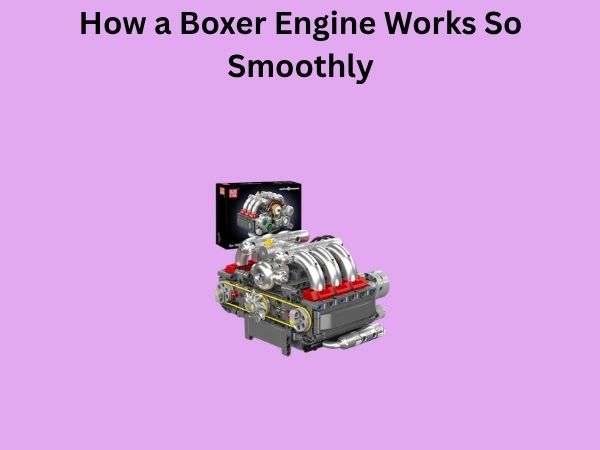
Think of a boxer engine like two fighters facing each other in a ring, throwing punches in perfect synchronization. Instead of pistons moving up and down in a vertical arrangement, a boxer engine positions its pistons horizontally, with one bank on each side of the crankshaft. They move toward and away from each other in a perfectly balanced dance.
This unique configuration creates an engine that feels different from anything else on the road. It’s the reason why certain enthusiasts become passionate advocates for this engine type, and why some manufacturers keep returning to it generation after generation.
The Historical Journey of Boxer Engines
Where Did the Boxer Engine Come From?
The boxer engine didn’t emerge by accident. Engineers were searching for ways to create more balanced, smoother-running engines, and the horizontally-opposed configuration proved to be a brilliant solution. The concept dates back to the early 1900s, though it really gained prominence when manufacturers like Porsche and Subaru adopted it as their signature design.
Porsche, in particular, has made the boxer engine legendary. When Ferdinand Porsche was designing the original Porsche 911 in the 1960s, he chose a flat-six boxer engine as its heart. This decision wasn’t made lightly—it was a calculated choice based on the engine’s superior handling characteristics and balance.
Evolution Over the Decades
Over time, boxer engines have evolved dramatically. From simple, carbureted designs to modern turbocharged, direct-injection powerplants, the basic principle remains unchanged while the technology has advanced exponentially. Today’s boxer engines are as sophisticated as any other modern engine type, featuring variable valve timing, cylinder deactivation, and advanced emission controls.
Understanding the Cylinder Configuration
How Are the Cylinders Arranged?
Here’s where things get interesting. In a boxer engine, the cylinders don’t point upward or downward. Instead, imagine looking at the engine from the side of the vehicle. You’ll see two banks of cylinders extending horizontally away from the center crankshaft, one pointing left and one pointing right.
This arrangement creates what engineers call a “pancake” profile. The engine sits low and wide rather than tall and narrow. For vehicle designers, this is a game-changer because it dramatically lowers the center of gravity of the entire car, which improves handling and stability.
The Crankshaft Design
The crankshaft in a boxer engine is engineered differently than in conventional engines. It has multiple throws that guide the pistons in their synchronized motion. When one piston on the left bank is moving toward the center, the corresponding piston on the right bank is simultaneously moving away from the center, and vice versa.
This perfect opposition is what gives the engine its name. It’s like watching synchronized swimmers—every movement on one side has a mirror movement on the other side.
How Combustion and Firing Order Work
The Four-Stroke Cycle in a Boxer
Just like any internal combustion engine, a boxer engine operates on the four-stroke cycle: intake, compression, combustion, and exhaust. What differs is how this cycle is executed across the horizontally-opposed cylinders.
- Intake stroke: The intake valve opens while the piston moves away from the cylinder head, drawing in an air-fuel mixture
- Compression stroke: Both valves close, and the piston moves toward the cylinder head, compressing the mixture
- Power stroke: The spark plug ignites the compressed mixture, creating an explosion that forces the piston away from the cylinder head
- Exhaust stroke: The exhaust valve opens, and the piston moves toward the cylinder head, pushing out the burnt gases
The Natural Balance Advantage
Here’s what makes the boxer engine special: its inherent balance. Because the pistons are always moving in opposition to each other, many of the vibrations that plague other engine designs naturally cancel each other out. It’s physics at its finest.
In an inline-four engine, for example, you get primary and secondary vibrations that require balance shafts to counteract. A boxer engine largely eliminates these issues naturally. This is why you’ll notice that boxer-powered vehicles, particularly Porsches and Subarus, tend to feel exceptionally smooth and refined.
What Are the Main Advantages of Boxer Engines?
Superior Handling and Center of Gravity
Let’s start with what enthusiasts love most. The low center of gravity that comes from a boxer engine’s flat profile translates directly to better handling. The engine sits low in the vehicle, which means the vehicle’s entire center of mass is lower. This reduces body roll during cornering and improves overall stability.
This is why Porsche has stuck with the boxer engine design since 1963. It’s not just tradition—it’s engineering excellence.
Exceptional Smoothness and Balance
We already touched on this, but it deserves emphasis. The natural cancellation of vibrations means that boxer engines require less complex balancing systems. They simply feel more refined to drive, with fewer vibrations transmitted through the steering wheel and chassis.
Compact Footprint
The horizontal orientation makes boxer engines relatively compact in width when compared to their displacement. This allows manufacturers to optimize interior space while maintaining performance. Space that would be taken up by a tall engine can be used for cargo or passenger accommodation.
Improved Cooling Efficiency
The wide, flat design of a boxer engine exposes more surface area to ambient air. This means cooling is more efficient, especially for air-cooled applications. Even in modern liquid-cooled boxer engines, the design facilitates better thermal management.
The Drawbacks: Why Aren’t All Engines Boxer Designs?
Manufacturing Complexity and Cost
If boxer engines are so great, why doesn’t every manufacturer use them? Cost is a significant factor. Boxer engines are more expensive to manufacture than conventional inline or V-engines. The specialized tooling, precision required, and the need for different cylinder head designs add to production costs.
For high-volume manufacturers producing budget-conscious vehicles, the additional expense isn’t justified. But for premium brands like Porsche and Subaru, the benefits justify the investment.
Service and Repair Challenges
Working on a boxer engine can be more difficult than working on a traditional inline or V-engine. The horizontal layout means less space around the cylinders and spark plugs. Mechanics often need specialized tools and extensive training to service these engines properly.
Packaging Constraints
While the low center of gravity is beneficial for handling, the wide footprint of a boxer engine can be problematic for front-wheel-drive designs. It’s harder to package a boxer engine in a car with front-wheel drive compared to an inline engine. This is why you rarely see boxer engines in front-wheel-drive vehicles.
Oil Management Issues
In some boxer engine configurations, maintaining proper oil distribution can be challenging. The horizontal orientation means that oil distribution to all cylinders requires careful engineering. Poor oil management can lead to premature wear if not properly maintained.
Boxer Engines Versus Other Engine Types
Boxer vs. Inline Engines
Inline engines are the most common type you’ll find on roads today. They arrange cylinders in a straight line, typically vertically. Inline engines are simpler to manufacture, cheaper to produce, and easier to service.
Boxer engines, on the other hand, offer superior balance and a lower center of gravity but cost more and are harder to work on. For vehicles where handling and smoothness are priorities, the boxer wins. For economical, practical vehicles, the inline engine makes more sense.
Boxer vs. V-Engines
V-engines arrange cylinders in a V-shaped configuration, typically at 60, 90, or 120-degree angles. They’re compact vertically and can accommodate more cylinders in a smaller package. A V-6 or V-8 offers excellent power and smoothness.
However, V-engines have a higher center of gravity compared to boxer engines. They also require more complex balancing systems. A boxer engine in the same displacement class will typically handle better, though a V-engine might offer more power and flexibility.
Modern Applications: Where Are Boxer Engines Today?
Porsche’s Unwavering Commitment
Porsche remains the boxer engine’s most famous advocate. From the legendary 911 to the new 718 Boxster, Porsche continues to develop and refine boxer engines. Even with modern turbocharged variants, the fundamental design principle remains.
Subaru’s Mass-Market Success
Subaru has done something remarkable with the boxer engine—they’ve democratized it. While Porsche focuses on sports cars and high-performance machines, Subaru has made boxer engines the standard across most of their lineup, from sedans to SUVs. Their boxer engines power vehicles that regular people drive every day.
Limited Applications Elsewhere
Beyond Porsche and Subaru, you’ll find boxer engines in some BMW motorcycles and in certain specialty manufacturers. The limited adoption reflects the cost-benefit calculation that most mass-market manufacturers make.
Maintenance and Care for Boxer Engines
Regular Service Requirements
Boxer engines don’t require fundamentally different maintenance than other engines, but they do need specialized attention. Oil changes must happen on schedule because the horizontal orientation affects how oil circulates. Many boxer engine owners recommend more frequent oil changes.
Spark plug replacement requires more effort and patience. The horizontally-opposed design means less workspace, so this routine task takes longer than in other engine types.
Common Issues to Watch For
Some boxer engines, particularly older models, have experienced issues with carbon buildup and head gasket failures. Modern direct-injection boxer engines have better thermal management, reducing these problems. However, finding a mechanic experienced with boxer engines is essential—inexperienced work can lead to costly problems.
The Technology Inside Modern Boxer Engines
Turbocharging Boxer Power
Modern boxer engines often feature turbocharging to boost performance without increasing displacement. The flat design actually accommodates turbochargers quite well, allowing for efficient exhaust gas routing. Subaru’s turbocharged boxer engines have become particularly popular, delivering impressive power figures from relatively modest displacement.
Direct Injection Systems
Contemporary boxer engines use direct fuel injection for better efficiency and cleaner emissions. This technology injects fuel directly into the combustion chamber at precisely the right moment, optimizing the burn and reducing waste.
Variable Valve Timing
Advanced variable valve timing systems allow boxer engines to adjust the opening and closing points of the intake and exhaust valves based on engine load and RPM. This optimization improves performance across the entire RPM range while reducing emissions.
The Driving Experience: What Does a Boxer Engine Feel Like?
If you’ve ever driven a boxer-powered vehicle, you know it feels different. There’s a distinctive character that comes from the unique engine configuration. The low-frequency rumble of a boxer engine is music to enthusiasts’ ears—it’s a sound you can’t get from other engine types.
The smoothness is palpable. At idle, there’s minimal vibration. At highway speeds, the engine feels refined and composed. The low center of gravity means the car carves through corners with confidence, and you can feel that foundation beneath you.
It’s not just performance specs or engineering metrics—it’s a holistic driving experience that has made boxer engines legendary among those who appreciate automotive excellence.
Future Prospects for Boxer Engine Technology
Hybrid and Electric Considerations
As the automotive industry shifts toward electrification, the future of boxer engines is uncertain. However, hybrid technology could extend their relevance. A boxer engine paired with electric motors could deliver exceptional efficiency and performance while maintaining the handling benefits of the low center of gravity.
Continued Innovation
Porsche and Subaru continue investing in boxer engine development. New materials, advanced combustion chamber designs, and improved efficiency technologies suggest that boxer engines will remain relevant for some time, at least in sports cars and enthusiast vehicles.
Conclusion
The boxer engine represents a unique solution to the challenge of creating a smooth, balanced, and handling-focused internal combustion engine. Its horizontally-opposed cylinder configuration creates inherent advantages in vibration cancellation and center of gravity that few other designs can match.
While boxer engines come with higher manufacturing costs and service complexity, the benefits they deliver make them the choice of legendary brands like Porsche and practical manufacturers like Subaru. The distinctive driving character, superior handling, and refined smoothness have earned these engines a dedicated following among automotive enthusiasts.
Understanding how a boxer engine works reveals why these engines have endured for over a century and why they continue to power some of the most beloved vehicles on the road. Whether you’re driving a sports car or a practical sedan, if it has a boxer engine, you’re experiencing a piece of automotive engineering history.
Frequently Asked Questions About Boxer Engines
Why do Porsche and Subaru use boxer engines exclusively in most models?
Porsche and Subaru have made boxer engines central to their brand identity because of the superior handling characteristics, lower center of gravity, and natural engine smoothness these designs provide. For Porsche, the 911’s legendary handling is partly attributed to its boxer engine’s position low in the chassis. Subaru adopted the boxer design to offer sports car-like handling in practical, affordable vehicles. Both manufacturers have invested decades in perfecting this technology, making it cost-effective for them despite the higher manufacturing complexity.
Is a boxer engine more reliable than other engine types?
Boxer engines are neither inherently more nor less reliable than other well-engineered engine designs. However, their reliability depends heavily on proper maintenance and service by experienced mechanics. Modern boxer engines, particularly those used by Subaru and Porsche, have proven their durability in real-world conditions over millions of miles. The key to reliability is following scheduled maintenance intervals and using qualified technicians familiar with boxer engine peculiarities.
Can you put a boxer engine in a front-wheel-drive car?
Technically possible, it’s rarely done because it’s impractical