The Ultimate Guide: How a Box Blade Works for Perfect Leveling
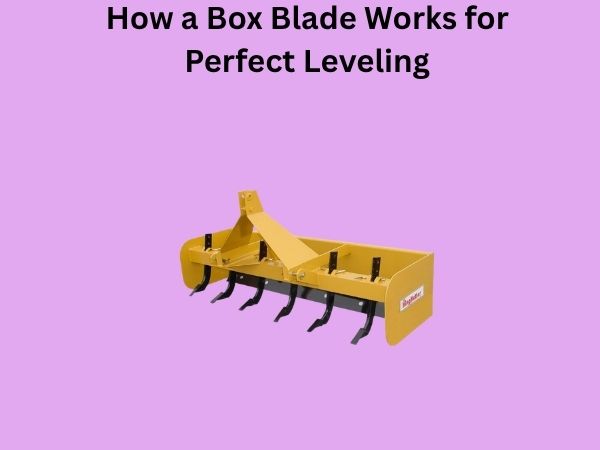
Have you ever driven past a construction site or farm and wondered how those perfectly flat, smooth surfaces get created? There’s a good chance a box blade was involved in that process. A box blade is one of those unsung heroes of land management that most people don’t think about until they need one. It’s essentially a towing implement that’s pulled behind a tractor or similar vehicle, and it’s designed to level, grade, and smooth out dirt and gravel surfaces.
Think of a box blade as the leveling tool of the agricultural and construction world. Just like you might use a leveler when hanging a picture on your wall, a box blade does the same thing for massive areas of land. Whether you’re preparing a driveway, maintaining a dirt road, or grading a construction site, understanding how a box blade works is essential knowledge for anyone involved in land work.
The beauty of a box blade lies in its simplicity combined with its effectiveness. Unlike some complicated machinery that requires extensive training to operate, the basic principle behind a box blade is straightforward. However, mastering its operation and understanding all its nuances can take time and practice.
Understanding the Core Components of a Box Blade
The Main Frame and Structure
At the heart of every box blade is its frame, which serves as the backbone of the entire implement. This frame is typically made from heavy-duty steel that’s built to withstand the constant pressure and stress of moving earth. The frame is what holds all the other components together and transfers the force from the tractor to the cutting and leveling tools.
The frame usually consists of a rectangular tube structure, which is why it’s called a “box” blade. This box-like design provides incredible strength while keeping the weight relatively manageable. The robust construction means that box blades can handle serious work without bending or warping, even when dealing with rocky or compacted soil.
The Cutting Edge and Scarifier Teeth
One of the most important features of a box blade is the cutting edge, which is the bottom part that actually touches the ground. This is typically a replaceable steel blade that does the heavy lifting when it comes to cutting through hard-packed dirt and breaking up compacted material. The cutting edge is the workhorse that makes the initial contact with whatever surface you’re grading.
Many box blades also feature scarifier teeth or shanks that stick down ahead of the main blade. These teeth are like the fingers of a rake, reaching down to break up stubborn, compacted soil. Imagine trying to smooth out a clumpy mixture with a spoon—the scarifier teeth are doing exactly that, loosening things up so the main blade can do its job more effectively.
The Hydraulic System
Modern box blades are equipped with hydraulic systems that give you incredible control over the implement. The hydraulics allow you to adjust the angle of the blade, raise or lower it, and control how aggressively it cuts into the ground. This is what separates a manually operated blade from a powered one, and it makes a huge difference in the precision and efficiency of your work.
The hydraulic cylinders are connected to the tractor’s hydraulic system, which means you control everything from the comfort of your cab. You can make adjustments on the fly without stopping, which saves time and allows for real-time corrections as conditions change.
Wheels and Depth Control
Most box blades have wheels on the sides that help control the depth of cut. These wheels are adjustable, allowing you to set exactly how deep you want the blade to penetrate the ground. This is crucial because you don’t always want to dig down the same amount—sometimes you’re just smoothing a surface, and sometimes you’re doing more aggressive grading.
How the Mechanics Actually Work During Operation
The Towing Process and Ground Engagement
When you hook a box blade to a tractor and start moving forward, something really interesting happens. The blade makes contact with the ground, and because it’s being pulled forward, it naturally wants to dig in. The angle of the blade, combined with the speed at which you’re moving, determines how much material gets cut and moved.
Here’s where the physics gets interesting: the material in front of the blade gets pushed backward and upward into the box portion of the implement. This is exactly what you want—the material flows into the box rather than just being scattered to the sides. The box shape is what allows this controlled movement of earth and material.
The Leveling Action
The actual leveling happens because of the angle and position of the blade relative to the wheels. The wheels determine your baseline—they establish the height at which your blade will operate. As you move forward, the blade skims along just below this wheel height, removing high spots and filling in low spots. This continuous action across an area gradually creates a level surface.
It’s similar to how you might use a putty knife to smooth drywall compound. You’re not just removing material; you’re redistributing it to create an even surface. The difference is that a box blade works on a massive scale, able to level areas hundreds of feet long.
The Scarifying and Breaking Action
The scarifier teeth work ahead of the main blade, breaking up compacted material and creating a more uniform texture. When you encounter hard, compacted soil that the blade alone couldn’t easily move, the scarifier teeth dig in first, loosening it up. This makes it easier for the main blade to then move this loosened material.
This two-step process is much more efficient than trying to move everything with just the blade. Think of it like loosening a stuck jar lid first before trying to open it—you’re making the job easier for yourself.
Different Blade Configurations and Their Purposes
Straight Blades vs. Angled Blades
Box blades come in different configurations, and understanding these differences is important for choosing the right one for your job. A straight blade is perpendicular to the direction of travel, and it’s excellent for general leveling and spreading material evenly across a wide area.
An angled blade, on the other hand, can be rotated to push material more to one side. This is particularly useful when you’re working on the side of a road and want to crown it or push material to the edge. The angled position allows for more directional control over where your material goes.
The Box Configuration Options
Some box blades have adjustable sides or wings that can be moved independently. This gives you flexibility in how you want to manage material movement. You might angle the left side one way and the right side another way, or you might move one side all the way out to push material further.
Oscillating and Floating Designs
More advanced box blade designs incorporate oscillating or floating systems. These allow the blade to follow ground contours more naturally, adapting to bumps and dips without you having to constantly adjust hydraulics. It’s like the difference between a rigid ruler and a flexible measuring tape—both have their place, but one adapts better to uneven surfaces.
Proper Attachment and Towing Setup
Hitch Classifications and Compatibility
Before you can even think about operating a box blade, you need to make sure it’s properly attached to your tractor. Most box blades use either a Category 1 or Category 2 three-point hitch, depending on their size. The hitch classification is important because it ensures that the implement is securely fastened and that weight distribution is appropriate for your tractor.
Using the wrong hitch classification is risky. Too small, and the blade might slip or move unpredictably. Too large, and you might be putting unnecessary stress on your tractor’s hydraulic system or frame.
Weight Distribution and Tractor Capacity
Box blades can be surprisingly heavy, ranging from 1,500 pounds for smaller models to 5,000 pounds or more for larger ones. This weight matters because it affects how your tractor handles and how much traction you have. Generally, heavier blades work better because the extra weight helps them cut and move material more effectively.
However, you need to make sure your tractor is powerful enough to handle the implement you’ve chosen. Trying to use a huge box blade with an underpowered tractor is like trying to mow a football field with a push mower—it’s technically possible, but it’s going to be slow and frustrating.
Operating a Box Blade: The Practical Side
Getting the Depth Right
One of the most important skills in operating a box blade is setting the correct depth. Too shallow, and you won’t accomplish much. Too deep, and you’re working harder than necessary and potentially damaging underlying structures or compacted base layers that you want to keep intact.
Most operators learn through experience what depth works best for different conditions. Rocky soil might require a shallower cut than loose, sandy soil. You want to find that sweet spot where you’re removing or redistributing material effectively without creating unnecessary resistance.
Speed and Efficiency
The speed at which you move significantly impacts how the box blade performs. Moving too fast doesn’t give the blade enough time to work effectively, and you’ll end up with incomplete leveling. Moving too slowly is inefficient and wastes time and fuel.
Generally, a moderate walking speed or slow jogging pace is appropriate for most box blade work. You want to move fast enough to cover ground but slow enough that the blade actually does its job. In rough or heavily compacted areas, slower speeds are necessary.
Making Adjustments on the Fly
Because most modern box blades have hydraulic controls, you can make adjustments while you’re working. If you notice that one section of your path needs more aggressive cutting, you can increase the blade angle or lower it slightly. If you’re moving into a softer area, you might raise it a bit to avoid digging in too deep.
This real-time adjustment capability is what separates competent operators from novices. Experienced operators constantly fine-tune their settings based on what they see happening in front of them.
Common Mistakes That People Make
Ignoring Ground Conditions
One major mistake is failing to assess ground conditions before starting work. Wet soil behaves very differently from dry soil. Rocky ground requires different settings than sandy soil. By taking a few minutes to evaluate conditions, you can set up your blade more effectively and avoid unnecessary wear and tear on equipment.
Overloading or Underloading the Blade
Some operators push their blade too hard, trying to move more material than the setup can handle efficiently. This puts unnecessary stress on the tractor and can actually slow you down. Conversely, working too conservatively means you’re making multiple passes when fewer, better-planned passes would suffice.
Poor Maintenance of the Cutting Edge
The cutting edge of your blade wears down over time. Dull blades don’t work effectively and actually increase the load on your tractor. Keeping your blade sharp or replacing it when necessary is essential maintenance. It’s one of those investments that pays for itself through improved efficiency.
Improper Blade Angle**
Many operators set their blade at an angle and then never adjust it. However, optimal angles change depending on what you’re trying to accomplish. A different angle might be better for spreading material versus moving it to the side. Understanding how angle affects performance is key.
Maintenance: Keeping Your Box Blade in Top Shape
Regular Inspections**
Like any piece of equipment, box blades benefit from regular inspections. Check for bent or cracked components, worn hydraulic hoses, and rust spots. Catching problems early is much cheaper than dealing with major repairs or replacements down the road.
Hydraulic System Maintenance**
Your hydraulic system is the nervous system of your box blade. Keep the fluid clean and at the proper level. Check hoses for leaks or damage, and have any issues addressed promptly. Hydraulic problems can quickly turn a simple job into a frustrating ordeal.
Replacing Wear Items**
Certain components are designed to wear out and be replaced. The cutting edge blade is the most obvious example, but scarifier teeth also wear down with use. Having replacement parts on hand means you can keep working rather than waiting for parts to arrive.
Storage and Off-Season Care**
If you live in an area with distinct seasons, proper storage of your box blade during off-season months is important. Keep it out of the elements if possible, or at minimum, make sure it’s protected from excess moisture. Draining hydraulic fluid or adding stabilizer extends the life of your equipment.
Real-World Applications and Use Cases
Agricultural and Farm Use**
On farms, box blades are used to maintain access roads, prepare land for planting, and manage drainage paths. They’re invaluable for keeping farm roads passable year-round and for creating proper grading around buildings and structures to manage water runoff.
Driveway and Road Construction**
For private driveway construction and maintenance, box blades are the tool of choice. They create that smooth, stable surface that makes a driveway both attractive and functional. Over time, driveways develop ruts and low spots, and a few passes with a box blade can restore them.
Site Preparation and Construction**
Before building begins, land typically needs to be graded and prepared. Box blades are essential for these initial preparation tasks. They help establish proper drainage patterns and create level building pads.
Erosion Control and Water Management**
Properly graded land with box blades directs water where you want it to go. This is crucial for erosion control and protecting structures from water damage. The crowning and sloping that box blades can create are fundamental to good water management.
Choosing the Right Box Blade for Your Needs
Assessing Your Tractor’s Capability**
The first step in choosing a box blade is honestly assessing what your tractor can handle. Horsepower, weight capacity, and hydraulic capacity all factor in. A small tractor with 20 horsepower is going to be overwhelmed by a commercial-grade 4,000-pound box blade.
Considering Your Primary Use**
Will you primarily be doing light maintenance work or heavy grading projects? Are you working on a small residential property or large acreage? The answer determines what size and feature set makes sense for you.
New Versus Used Equipment**
Used box blades can offer good value if they’ve been maintained properly. However, new equipment comes with warranties and the latest features. For occasional use, a quality used model might make perfect sense. For frequent commercial use, new equipment might be more economical